Haiku
Francisco and I had been friends since 1997. We shared a wide range of social, political, philosophical views on life and within music itself. Other than being one of the founding members of Lucybell, Francisco was one of the most talented drummers in South America. He had collaborated many times with the likes of Gustavo Ceratti of Soda Stereo and had been involved in projects with Robin Guthrie of the Cocteau Twins.
Francisco was working on a new project called “Ovalo”, which was his first solo venture. The project was going to be released by Warner Music Chile and Francisco asked me to come over and hear out the demo of the planned single. The track was entitled “Haiku” referring to the Japanese poem and I was instantly drawn to the melody and beat of the song. Having known Francisco for many years, I could instantly see where he got some of the influences and direction for the piece.
The project was still in its diaper stage, and my friend needed lots of help so I set out in the development of television, print, web elements and subtle auditory critiques of the tracks before the album was completed. Although the project was taken on by a mega label like Warner the budget remained low. I believed in “Haiku” as a song and in Francisco as an artist, and in doing so I felt that working together we would achieve something truly special. Our deep friendship was based on parallel tastes and due to the success of “Mil Caminos”, I felt we would create another dynamite project.
During my first day at Francisco’s house I began to take images in an around his apartment to develop in Photoshop and Illustrator for the album cover and future website. The only guidelines for the video were to use nature as a backdrop or main character, everything else was up to me. Francisco had also come up with a perfect location, a coastal town three hours away from Santiago called Mantencillo.
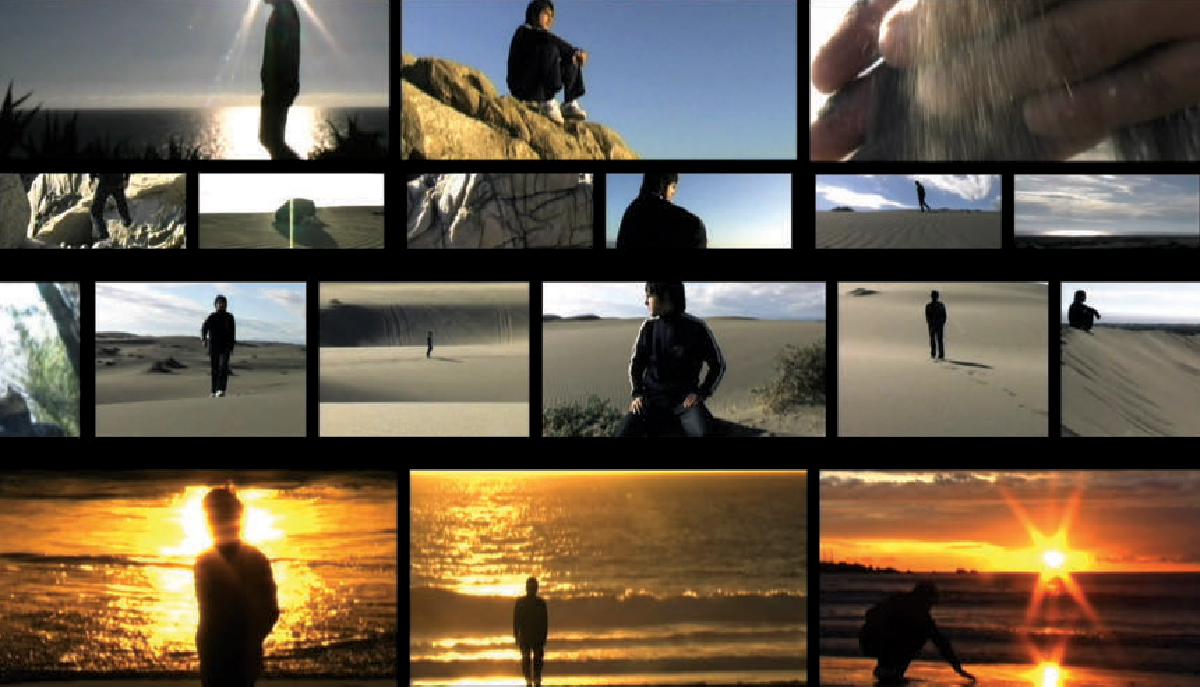
Mantencillo was a unique beach town contained in a diverse eco-system. Beach, desert, and woods were visually and environmentally different from each other, however within walking distance to one another. Logistically the location made sense since Francisco and I were going to be carrying the equipment through woods, desert and beaches.
From day one, production felt more like an artistic journey than a mundane video production. The strategy was to use the morning light for the wooded area scenes, the afternoon light for the desert scenes and the evening light as it settled to the West and into the ocean, our final shot. This final shot would symbolize the end of the journey. The concept was simple, I was going to have Francisco interact in and around the crossed eco-systems while doing random activities.
Looking back on it now I wanted to investigate Francisco’s sensibilities and his interaction with his environment as he encountered it. There was a lot of improvisation by both of us in making the video. We used the surrounding environment as a guide to set up the shots and best shape the actions taken by Francisco as he walked into the frame. While editing I took the opportunity to convey the transition of the different environments by merging them with the transitions of the song, so as the song changed its melody, beat, and harmony so did the visual. I set out to achieve a visual output as harmonious and gentle to the eye as the song was to the ears.